

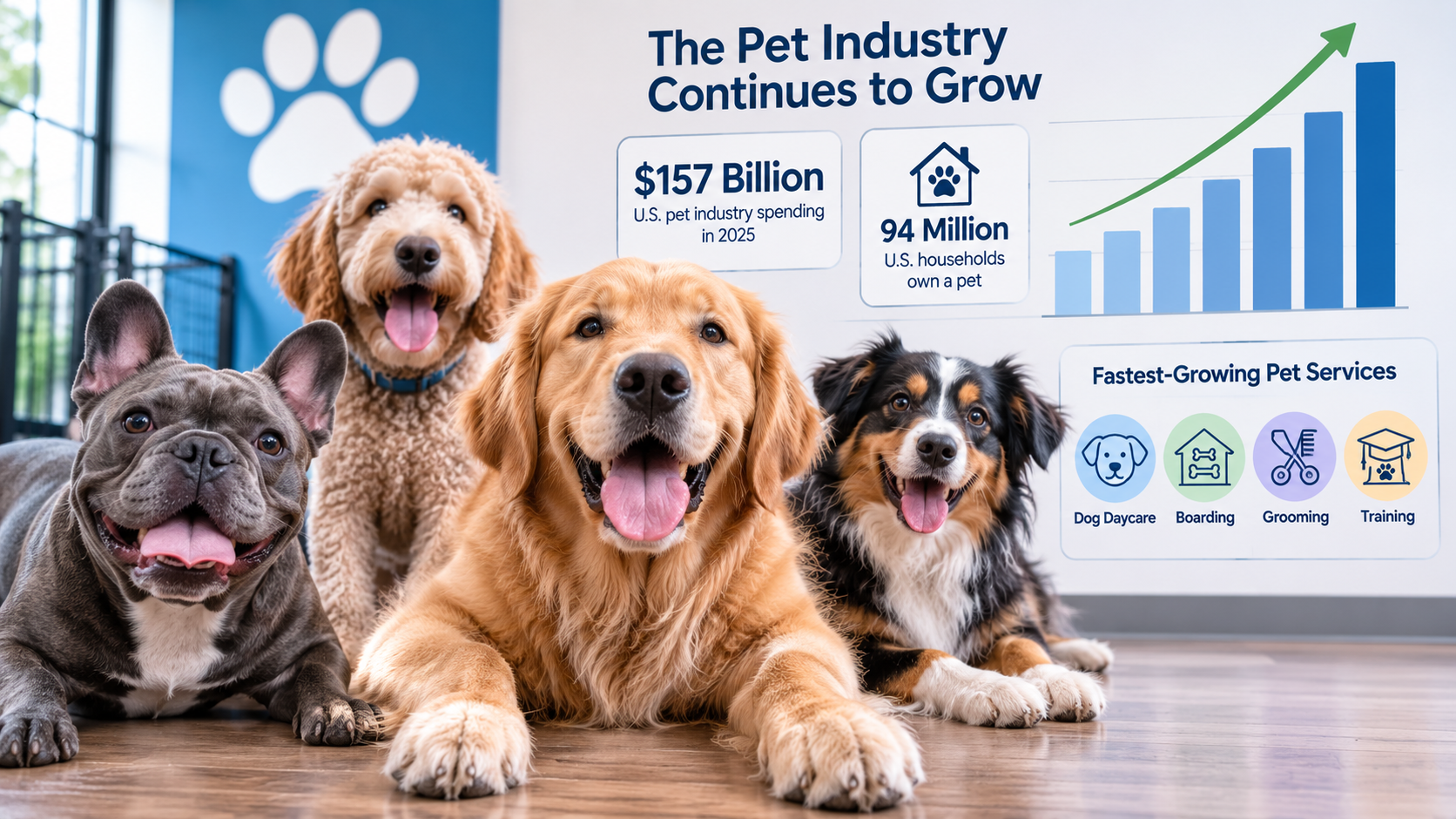
The U.S. pet industry has grown into a massive consumer market, supported by millions of pet-owning households and changing attitudes toward animal care. For franchise buyers, pet industry statistics can provide valuable insight into where consumers are spending and which trends are influencing demand.
But a growing industry does not automatically make every pet business a smart investment. The numbers are only a starting point. Prospective franchise investors also need to understand why consumers are spending, which services address ongoing needs, and how an individual franchise is positioned within the market.
Here are some of the most important pet industry statistics and trends to consider when researching franchise opportunities in 2026.
| Statistic | Latest Data |
| Total U.S. pet industry spending | $157 billion (2025 APPA estimate) |
| U.S. households that own a pet | 94 million (71%) |
| Dog-owning households | 68 million |
| Average annual spending per pet-owning household | About $1,770 |
| Fast-growing service categories | Daycare, boarding, grooming, training, transportation |
The U.S. Pet Industry by the Numbers
According to the American Pet Products Association (APPA), Americans are expected to spend approximately $157 billion on their pets in 2025, continuing the industry’s long-term growth trajectory. Spending spans several major categories, including:
- Pet food and treats
- Veterinary care and products
- Supplies, live animals, and over-the-counter medicine
- Other pet services, including daycare, boarding, grooming, training, pet sitting, transportation, and wellness services
While food and veterinary care account for a significant share of total spending, professional pet services have become increasingly important as pet owners seek convenient, reliable care that fits modern lifestyles.
For franchise buyers, the overall market size is encouraging—but the more valuable insight is understanding where consumer demand is growing. Businesses that address recurring needs, such as daycare and boarding, may benefit from repeat customers who rely on these services throughout the year.
This broader growth in the pet care industry gives prospective franchise buyers an important market to research.
The question is not simply, “Is the pet industry growing?” A better question is: Where is consumer demand coming from, and does the business model address a real need within that market? At Hounds Town, that demand is met through Houndology™, a philosophy that guides everything from dog management and pack play to the overall customer experience.
Why This Matters for Hounds Town
For prospective franchise buyers, understanding where pet owners spend their money is only part of the equation. It’s equally important to evaluate which business models are positioned to meet evolving consumer needs.
Hounds Town USA operates within one of the pet industry’s fastest-growing service segments, offering dog daycare, overnight boarding, and pet spa services built around its proprietary Houndology™ philosophy and the belief that We Let Dogs Be Dogs®. Rather than simply supervising dogs throughout the day, Hounds Town’s approach embraces structured pack play, natural canine behavior, and socialization designed around what dogs instinctively need. As more pet parents seek trusted care providers during workdays, vacations, and other commitments, Hounds Town continues its mission of changing the way the world understands and interacts with dogs while delivering an experience that benefits dogs, pet parents, and franchisees alike.
Pet Ownership Supports a Large Consumer Market
Pet ownership is firmly embedded in American life. APPA’s industry research consistently points to tens of millions of pet-owning households across the United States, creating a significant consumer base for businesses serving companion animals.
Dogs are particularly important within the pet services market.
Caring for a dog involves more than buying food or scheduling annual veterinary appointments. Dogs need supervision, exercise, social interaction, and care when their owners cannot be home.
That can create a need for dog daycare, overnight boarding, pet spa services, training, transportation, and other professional care options.
For someone researching a pet care franchise, the distinction between pet ownership and pet service demand matters. A large population of pet owners creates a potential market, but franchise buyers still need to understand which problems a business solves and why customers choose a professional service.
Consider the consumer behind the statistics. What challenges come with caring for their dog? Which needs might occur more than once?
Those questions help turn broad industry data into useful franchise research.
Pet Parents Are Treating Dogs More Like Family
One of the major trends influencing pet industry growth is the humanization of pets.
Many consumers view dogs as family members and companions rather than simply animals living in the home. This shift can influence how pet parents research care options and prioritize spending.
The humanization of pets has influenced pet industry growth by changing consumer expectations around products, services, and professional care.
A pet parent may pay closer attention to where their dog spends the day, how the dog is treated, and whether a business has a philosophy they trust.
For franchise buyers, this means total pet spending is only part of the story. Consumer expectations are changing, too.
Pet care brands need to clearly explain what makes their approach different. Trust, expertise, convenience, and a recognizable philosophy around animal care can all influence customer decisions.
That philosophy is supported by Houndology™, Hounds Town’s proprietary dog management philosophy built around understanding natural canine behavior. Rather than asking dogs to adapt to a human-designed environment, Hounds Town creates an experience designed around what dogs naturally need, helping differentiate the brand in an industry where trust, expertise, and purpose matter more than ever.
Work and Travel Are Influencing Pet Care Demand
Modern lifestyles also help explain demand for professional pet services.
People work, travel, and manage changing schedules. Dogs, meanwhile, still need care and interaction.
For pet parents, finding reliable care during a long workday or extended trip can become an ongoing challenge. Friends and relatives may not always be available, and informal care arrangements do not work for every family or every dog.
Professional pet care services provide another option. Dog daycare can support pet parents during work and other commitments, while overnight boarding addresses travel needs. Many pet owners also look for services beyond basic supervision. Grooming appointments, transportation services, enrichment programs, bathing, and structured play sessions help busy households maintain their pets’ routines while providing social interaction and professional care.
Unlike one-time retail purchases, these services naturally create recurring customer relationships. Many families rely on daycare as part of their weekly routine, board their dogs whenever they travel, and schedule recurring pet spa services throughout the year. For Franchisees, these repeat visits help build long-term customer loyalty while serving an ongoing need within their community.
Understanding the differences between dog daycare and overnight boarding versus pet sitting also demonstrates how different services can meet different consumer needs.
For franchise buyers studying pet industry trends, the lesson is to look closely at the problem a service solves. Is consumer demand tied to a temporary trend or a broader lifestyle need?
No franchise can guarantee repeat customers or financial performance. However, understanding why people use a service can help buyers evaluate a business opportunity more carefully.
Why Service-Based Pet Franchises Deserve a Closer Look
Not every segment of the pet industry operates the same way.
Retail businesses often depend on product sales, while veterinary practices focus on medical care. Service-based pet franchises, however, meet recurring lifestyle needs by providing daycare, boarding, grooming, training, and related care that many pet owners use regularly.
As remote work evolves, travel increases, and busy schedules continue to shape daily life, professional pet care services help owners ensure their dogs receive supervision, exercise, and social interaction when they cannot provide it themselves.
For franchise buyers, this means evaluating more than industry growth. It’s important to understand customer retention, operational requirements, staffing, local demand, and the support offered by the franchisor. A growing market creates opportunity, but a well-developed operating system helps Franchisees consistently deliver exceptional care while building long-term customer relationships. Prospective franchise investors should look beyond industry growth and evaluate the philosophy, operating model, training, and support that differentiate one pet care franchise from another.
Look Beyond the Pet Industry Numbers
Pet industry statistics highlight a large and growing market supported by millions of pet-owning households and continued consumer spending. However, successful franchise ownership depends on more than favorable industry trends. Prospective owners should carefully evaluate customer demand, brand differentiation, operational systems, franchisor support, and the Franchise Disclosure Document before making an investment decision.
If you’re exploring opportunities in the pet care industry, Hounds Town USA offers a proven service-based model built around one simple philosophy: We Let Dogs Be Dogs®. Learn more about why entrepreneurs choose Hounds Town, explore the steps to ownership, and discover whether you have the qualities of an ideal Hounds Town Franchisee.If the pet care industry is on your shortlist, learn more about how to choose the right franchise for you as you continue your research.
At Hounds Town, franchise ownership is part of the Journey to Freedom™—the freedom to build a business with purpose, create a lasting legacy, and make a meaningful impact while helping change the way the world understands and interacts with dogs.
Ready to explore whether Hounds Town is the right fit for you? Discover how our proven operating system, proprietary Houndology™ philosophy, and mission-driven approach are helping Franchisees build businesses with purpose while changing the way the world understands and interacts with dogs.
Frequently Asked Questions About Pet Industry Statistics
Pet industry statistics can help identify market trends, but they cannot complete the franchise due diligence process for you.
If you’re comparing pet franchise opportunities, use industry data as a starting point for asking better questions.
What Is Driving Consumer Demand?
Do not stop at “people love their pets.”
Identify the actual consumer need. Customers may need daytime care because of work, overnight boarding because of travel, or convenient pet services that fit into busy routines.
Understanding the problem makes it easier to evaluate the franchise’s target customer.
Does the Brand Have a Clear Point of Differentiation?
Growing industries can attract more competitors.
Ask what distinguishes a franchise from independent businesses and other franchise systems. A proprietary process, clear operating philosophy, specialized expertise, or differentiated customer experience may help a concept stand apart.
Is There a Proven Operating System?
Passion for animals is valuable, but it is not an operating system.
Franchise buyers should investigate training, staffing, technology, marketing, procedures, and the resources available to help owners manage the business.
Prospective owners should also understand what type of franchisor support prospective Franchisees should expect before committing to an opportunity.
Have You Reviewed the Franchise Disclosure Document (FDD)?
Industry statistics can help identify promising markets, but they should never replace thorough due diligence.
Before investing in any franchise, prospective owners should carefully review the Franchise Disclosure Document (FDD), paying close attention to information about startup costs, ongoing fees, training, operational support, and any Financial Performance Representations (Item 19), if provided.
Speaking with existing Franchisees, researching the local market, and evaluating the franchisor’s long-term support system can provide valuable insight beyond what industry statistics alone can reveal.
Does the Franchise Align With Your Ownership Goals?
The market is only one part of the decision.
Some franchise buyers want to leave corporate life. Others hope to build a family business, become more active in their community, or pursue a business connected to a personal interest.
A franchise should make sense from a market perspective while also aligning with your goals, leadership abilities, and willingness to follow the system.